Miss Saigon & Madama Butterfly

My favorite Broadway play is Miss Saigon, and my favorite opera is Madama Butterfly. A coincidence? I think not.

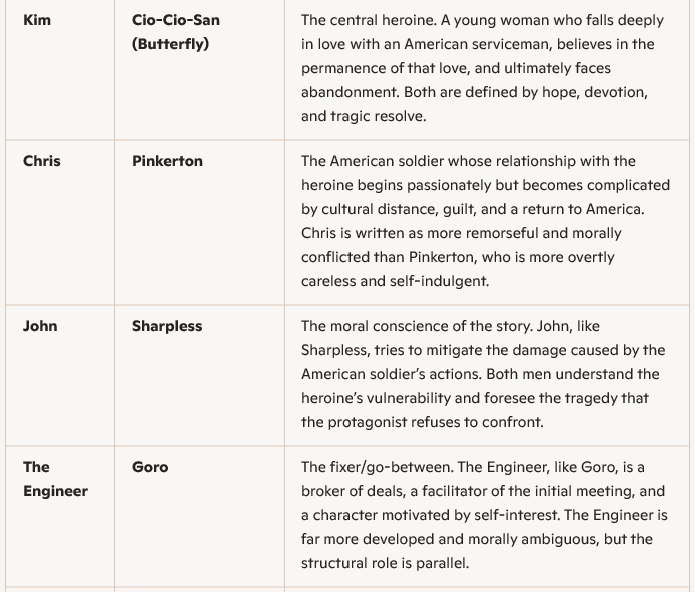
Correlation between Miss Saigon characters and Madama Butterfly characters.

A few nuances worth noting:

  • Miss Saigon expands the world of the story, giving more psychological complexity to characters who were archetypal in Madama Butterfly.
  • The Engineer is the biggest departure — he’s not just a matchmaker but a satirical, morally elastic survivor of history.
  • Chris is intentionally written to be more sympathetic than Pinkerton, whose callousness is central to Puccini’s critique of colonial attitudes.
  • Kim’s agency is different from Cio-Cio-San’s: her choices are shaped by war, displacement, and survival, not just romantic devotion.

Recent implicit affirmations

I’m a big fan of recognizing “implicit affirmations,” which come in many forms. Here are a few examples of them:

  • being hello worthy
  • being good company
  • doing good
  • being thought of
  • being asked to lunch
  • positively influencing another
  • being around others
  • greeting others
  • people participating in your outings or events

After these 11 recent implicit affirmations that Bob and I recognized, read nine 50-word stories I wrote about implicit affirmations in general and have happened to me in the past.


Some recent implicit affirmations Bob have recognized and appreciated:

  1. Guy, our friend and neighbor, has a two-seat subscription to a movie theater series asked Bob to attend their Seven Samurai screening.
  2. Guy also has a two-seat subscription to the NC Opera, and he invited me to attend Madama Butterfly with him at the end of this month.
  3. When we told our friend Kevin that our holiday card to him had recently been returned, he said, “We should figure out how to cut out the middleman and you can hand-deliver it to me — want to get a cocktail someplace some night?” to which we invited him to stop by after work one day and have a (free) drink and some snacks at our house. And which he promptly did the next day.
  4. Jennifer & Ian, whom we recently met at a neighborhood gathering included us for a brunch in celebration of Jennifer’s birthday.
  5. Dyson & Samantha, whom we met at our neighborhood New Year’s Eve progressive cocktail party, invited us over for happy hour yesterday. Oh! And while we were there, Dyson chose to open a 48-year-old bottle of booze with us, which just happens to be our “house bourbon of choice” — Canadian Club.
  6. A few days ago, Claire, our friend and neighbor was walking by with her dog Fergus, and she texted asking us if we were home and might be available for a little chin-wag. She said Fergus saw our house, where he knows he’ll get a treat, and wanted to stop by. Consider us affirmed by both Claire and Fergus.
  7. Kim, our friend and neighbor — and published author who’s starting a blog — asked me if I’d be willing to fill out a questionnaire about readers to potentially post in her blog, and after sending her my responses, she said,”Thanks so much, John! I knew you’d go at this with gusto!”
  8. Jen, our friend and neighbor, texted us: “If you’re walking with us to the Capitol tomorrow to see the monks, we’re leaving our house at 2:30.”
  9. Beth, our friend and neighbor, knows I love bananas, and she recently gave me a bottle of banana simple syrup that she’d made specifically for me.
  10. Erin, our friend and neighbor, texted us amid the recent snow/ice storm: “Hi neighbor! Just wanted to check in during the storm and let you know we’re around if you need anything. Let’s hope the power stays on tonight. ☺️🤞”
  11. Allison & Peter, neighbors of ours who when walked by our house and saw a tarp we had thrown over our car, with trash bins leaning against it to keep it from blowing off, to preclude having to clear it from potential ice and snow, texted us: “Bob and John, Peter and I would like to know if your garbage cans attacked your car before or after happy hour last night?”

Thanks to all of you for affirming us!


Here are nine 50-word stories about how implicit affirmations have manifested themselves for me in the past:

You’re hello worthy You’re good company You’ve done good
I recognized it as an implicit affirmation when someone walked by me without my seeing them but still said, “Hello, John.” It would’ve been easier for them to just slip by without a greeting, but they made the effort in spite of that, so I must be important to them. I recognized it as an implicit affirmation when I asked a colleague if they wanted to take a walk to the nearby café for a cup of coffee and they said yes without an apparent thought of—or as much as a glance at—the cup already on their desk. I recognized it as an implicit affirmation when a young colleague asked me if I’d be willing to have lunch with him one day to “pick my brain.” He wanted me to share with him as many things I could think of that have contributed to my apparent financial security.
Thinking of you Let’s do lunch Influenced by your writing
I recognized it as an implicit affirmation when a colleague messaged me: “John Martin! Was just peeling an orange with the Tupperware tool you gave me 400 years ago and thought about you.” It would have been easier not to message me, and I wouldn’t have had my day made. I recognized it as an implicit affirmation when, a few months ago we’d left it at “Let’s get together as soon as it’s safe to,” and that friend followed up now that it is safe with an invitation to lunch. It would have been easier to just let it ride. I recognized it as an implicit affirmation of having read my 50-word stories when a friend direct messaged me during the Q&A part of a virtual work meeting: “Are we on the same meeting? Thanks to you, I’m listening for how moderators tweak the Q&As. Hope you are doing well!
Proximity Greeting Participation
I recognized it as an implicit affirmation when, in the spreadsheet to reserve a workstation to use in the office now, a colleague chose one next to mine. Only 2 of our 11 floors in the building are being used, and the desks are spaced apart in a checkerboard pattern. I recognized it as an implicit affirmation when a colleague working in a different area took time to come to my workstation to say hello. We’d both worked last week and had seen each other then, so it would have been natural to not make the extra effort this time. I recognized it as an implicit affirmation when a colleague came to my desk last week for a short bourbon outfitters™ gathering at my workstation when he didn’t even want any bourbon. The easier response would have been to pass with a, “No thanks; I’m not going to drink today.”

Do you recognize any recent implicit affirmations in your life?

The average number of surgeries a person has

In my recent reading of The Checklist Manifesto: How to Get Things Right, I came across the statistic that the average person will have 7 surgeries in their lifetime.

That, of course, made me want to count mine, and lo and behold:

Surgery #
Date Age Type
6
07/13/2023 65 lumbar posterior fusion and lateral lumbar fusion surgery
5
10/13/2021 64 total left knee replacement
4
02/11/2020 62 dental implant surgery
3
03/15/2012 54 left knee torn meniscus arthroscopic surgery re-do
2
12/11/2008 51 left knee torn meniscus arthroscopic surgery
1
1986 29 vasectomy

I’m thinking I’m going to exceed the average — eventually.

Mom memories

Many of you might remember my Facebook posts during the years I drove to Greenville, NC almost every Saturday to take my mom to play bingo. Like a lot of posts on social media, they were almost exclusively happy times and memories.

Here’s a memory from my sentence-a-day diary that didn’t make it onto Facebook:

November 25, 2017
Saturday: I took mom to bingo, and she pretty much bitched about Brookdale goings-on and her aches and pains from the minute I got there until bingo started.

And now back to some publicly preferred happy memories:

Diving Chess: The ultimate physical and intellectual challenge

On the TV right in front of my elliptical machine at the gym yesterday, I saw the likes of this:

Man underwater at chess board making his move

I have so many questions:

  1. Why???
  2. How have I never heard of this “sport” that’s been around since 2012?
  3. How heavy is that board and how strong are the magnets keeping the pieces on it and at the bottom of the pool?
  4. Why did they change the rule in 2022 to disallow weights on your body to make you have to continuously push the water up with your arms while you’re thinking about your move?

The omniscient internet says regarding the rule change to preclude weights:

“This emphasizes the physical challenge of the sport, requiring players to manage their oxygen levels and natural buoyancy while making a chess move. The inability to use weights means players must expend more energy to stay down, which can burn through their air faster and adds a new layer of strategy and physical endurance to the game.”

Among the statistics presented at the end of a match are:

Forfeits/warnings: The number of times a player surfaces for air without making a move is tracked (a first offense is a warning, a second is a forfeit).

Total time underwater: The accumulated time spent making moves.

Breath-hold duration: Although not an official “statistic” tracked in the final score, a player’s ability to hold their breath for extended periods is a key factor in their performance and is often noted in commentary and related articles.

Books about books analysis

At our most recent Mostly Social Book Club I mentioned how I’m drawn to books about books and that I thought the book club members were, too.

Then I said, “It would be interesting to look at the list of books we’ve read over the years and do a little analysis on that theory. I did that very thing, using ChatGPT for the analysis.


I created a table with the books we’ve read that are of the books about books genre, along with a very short description of how books were incorporated into those books:

# Book about books Chosen by How books are incorporated
1 The Memory Library John A library curated by a mother for her daughter; then one by the daughter for her mother
2 The Storied Life of A.J. Fikry Suzanne Curmudgeonly bookstore owner finds a baby on his store’s steps
3 The Little Paris Bookshop Mary Floating bookstore on a barge provides the exact books people need
4 The Radcliffe Ladies’ Reading Club Mary Lady turns derelict building into enchanting bookshop where she starts a bookclub for needful Radcliffe co-eds
5 The Professor and the Madman: A Tale of Murder, Insanity and the Making of the Oxford English Dictionary John Imprisoned — and arguably mad — man helps devise entries for what becomes the OED
6 The Woman in the Library Mary Three interwoven narratives help unravel one woman’s murder in a library
7 The Midnight Library Mary Woman contemplating suicide experiences parallel-universe lives through library-shelf books
8 The Book Woman of Troublesome Creek Sharon A “blue-skinned” traveling librarian encounters some grateful, some not, people
9 The Personal Librarian John J.P. Morgan’s personal librarian rises meteorically managing his books and papers
10 The Editor John A new writer’s autobiographical novel is picked up by editor Jackie O.
11 The Plot Sharon Previously published writer gets the break he so desperately wants for his next book
12 Dewey: The Small-town Library Cat Who Touched the World Sharon Arguably about books, but about a library, a library’s cat becomes famous around the world

Then I asked ChatGPT: “Please do an analysis of the content in the ‘Chosen by’ column and the ‘How books are incorporated’ column of this table.”

ChatGPT’s analysis of the “Chosen by” column

The books were selected by 4 individuals: John, Mary, Suzanne, and Sharon. The distribution of the 12 books selected is as follows:

  • John selected 4 books.
  • Mary selected 4 books.
  • Sharon selected 3 books.
  • Suzanne selected 1 book.

ChatGPT’s analysis of the “How books are incorporated” column

Based on the “How books are incorporated,” the commonalities in the content fall into 3 main themes:

  1. Libraries, Librarians, and Bookstores as Central Settings:
  2. Professional Roles Centered on Books:
  3. Books/Libraries as a Source of Transformation or Plot Device:

It’s pretty amazing that ChatGPT can glean all that just from those short descriptions I provided.


Intrigued, I did one more exercise. I’ve read a lot of books outside book club, so I repeated the exercise with a list of books about books that I read on my own:

# Book about books How books are incorporated
1 The Jane Austen Book Club 6 people meet monthly to discuss a Jane Austen novel whose plot mirrors relationships they are navigating
2 Hell of a Book An African American author writes a “hell of a book,” in order to get to the heart of racism, police violence, and the hidden cost exacted upon Black Americans, and America as a whole
3 Everyone in my Family Has Killed Someone A writer who creates self-help books on writing uses this background to solve murders, treating the real-life mysteries like one of the fictional whodunits he writes about
4 The Book of Last Letters Nurse creates a book in which potentially dying soldiers can relate “last words” to loved ones
5 Yellowface White author steals and publishes dead Asian author’s next book
6 The Uncommon Reader A queen, who becomes a reader late in life, becomes so passionately obsessed that her public duties begin to suffer
7 The Christmas Book Hunt Woman wants to fulfill seriously ill great-aunt’s wish to be reunited with a long-lost hand-illustrated book from childhood
8 The Bookshop Sisterhood 4 long-time friends go through it (with each other) to open the bookstore of their dreams
9 A Very Bad Thing A bestselling author’s disastrous past comes back to hurt her
10 The Starless Sea A grad student discovers a mysterious book hidden in his college’s library stacks in a “frame narrative” that leads readers from a first story into one or more other stories within it
11 The Marriage Plot A dutiful English major is writing her senior thesis on Jane Austen and George Eliot, purveyors of the marriage plot that lies at the heart of the greatest English novels
12 The Bookclub on Waverly Lane A new neighborhood book club unmasks authentic lives of Stepford-wives-like women
13 The Bookstore Sisters Bookstore-owning sisters with bad blood between them reunite to fight
14 Murder in the First Edition Dead woman and missing $60,000 first-edition book instigate an investigation
15 The Sentence Deceased bookstore’s most annoying customer haunts it for a year
16 The Book Woman’s Daughter Daughter of the protagonist in the book “The Book Woman of Troublesome Creek” carries on her work despite a lingering ornery mule
17 The Liar’s Dictionary A lexicographer inserts fake words, as a form of rebellion and artistic expression, into the dictionary his team is working on
18 I Will Judge You by Your Bookshelf How books are collected, used for decoration, inspire us, and treated as sacred objects
19 The Bookshop of Yesterdays Girl inherits bookshop that holds clues to her family’s past
20 The Bar Harbor Retirement Home for Famous Writers (and Their Muses) Retirement-home literary legends spar, conjure up new stories, and almost magically change the lives of people around them
21 The End-of-Your-Life Book Club Son and dying mother read together bringing them close as her life comes to a close
22 Byrd A lover of books is living a cloistered life as a bookstore clerk

Then, I fed both tables into ChatGPT and asked it to do the same analysis on the combined set of books:

ChatGPT analysis of the “How books are incorporated” columns of both the MSBC books and John’s books read

Several common themes emerge that describe the central role books and the literary world play in the narratives:

  1. Libraries, Librarians, and Bookstores as Central Settings
     
  2. Both tables feature narratives where the physical locations and professions associated with books are the primary setting or focus of the story:

  3. Authorship, Publishing, and the Creative Process
     
  4. A significant number of books focus on the creation, production, and commerce of literature, involving authors, editors, and the publishing world:

    • The Author’s Life: The plot revolves around the lives and consequences faced by writers, whether they are working on a thesis or dealing with the repercussions of their work.
    • Industry Intrigue: Stories highlight the darker side of the publishing world, including theft and competition.
      • Examples: An author stealing a dead peer’s manuscript (Yellowface), and a new writer being mentored by a famous editor (The Editor).
    • Book Creation: Books are about the creation of specific literary works, such as dictionaries or novels.
  5. The Book as a Catalyst or Plot Device
     
  6. In many cases, a specific, unique book or the act of reading/discussing books is the catalyst for the main action, often involving a mystery or a quest:

    • Quest for an Object: The narrative centers on a search for a unique or sentimental physical book.
    • Metaphorical or Transformative Power: The books themselves have a transformative or symbolic effect on the protagonist.
    • Books for Communication/Connection: Books are created or used as a vessel for communication in times of need.
    • Book Clubs and Shared Reading: Literature is used as a foundation for examining relationships and building community within a group.

What a fun and interesting exercise!


Do you gravitate toward books about books in your reading?

🍌 🌞 🪑

I had my annual Medicare Wellness Visit, which “is not a physical exam, but rather a planning session that includes a health risk assessment, a review of your medical history, medications, lifestyle, and a discussion of recommended screenings.”

This visit starts with getting 3 words to remember, and to recall later in the visit. My three words for today were:

  1. banana
  2. sunrise
  3. chair

To help me remember them, I pictured myself sitting in a beach chair, watching the sunrise, with a banana in my drink and wondering where the rum is.


Next in the visit is to draw an (analog) clock with the hands set to a particular time, which this time was 11:10.

As I do each year now during this part, I wonder what “these kids today” who don’t know how to tell time on an analog clock do for this simple Alzheimer’s detection test.


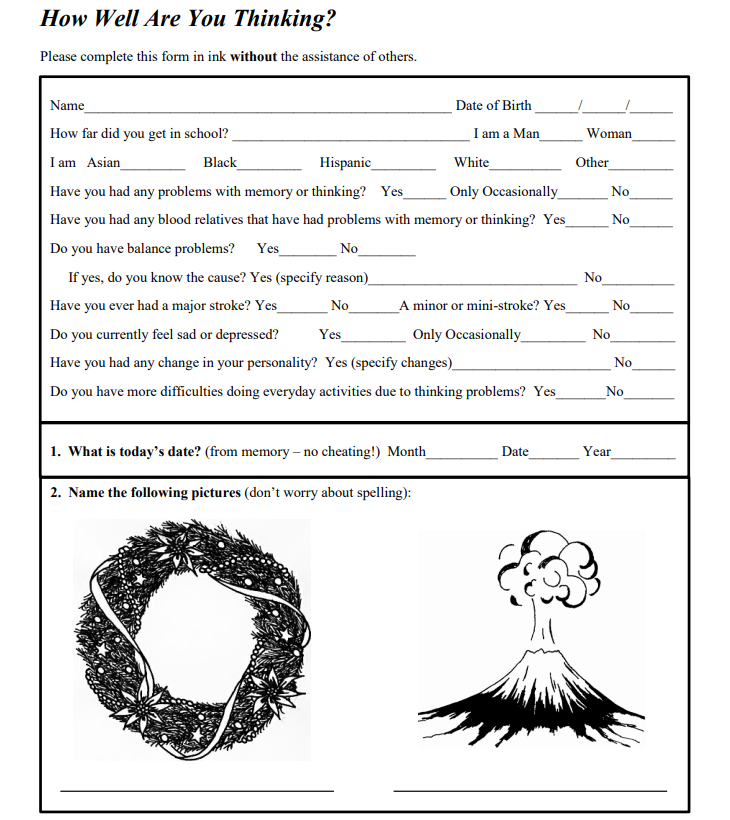
The rest of the visit is spent on one of the several variations of the SAGE (Self-Administered Geocognitive Examination) assessment, of which this is one example:


Other formats of the SAGE assessment forms are available on this Ohio State University website.

The banana that “doesn’t brown” is hitting the shelves.

From ZME Science: The First New Commercial Banana In 75 Years Is Coming To The Market Next Year

“When a banana is bruised, cut, or peeled, enzymes trigger a chemical cascade that ends in melanin, the same pigment that colors human hair. Those brown patches are technically harmless, but they’re responsible for throwing away nearly one-third of all bananas grown worldwide — roughly 5 billion bananas in the U.S. alone every year.” Read the entire article.


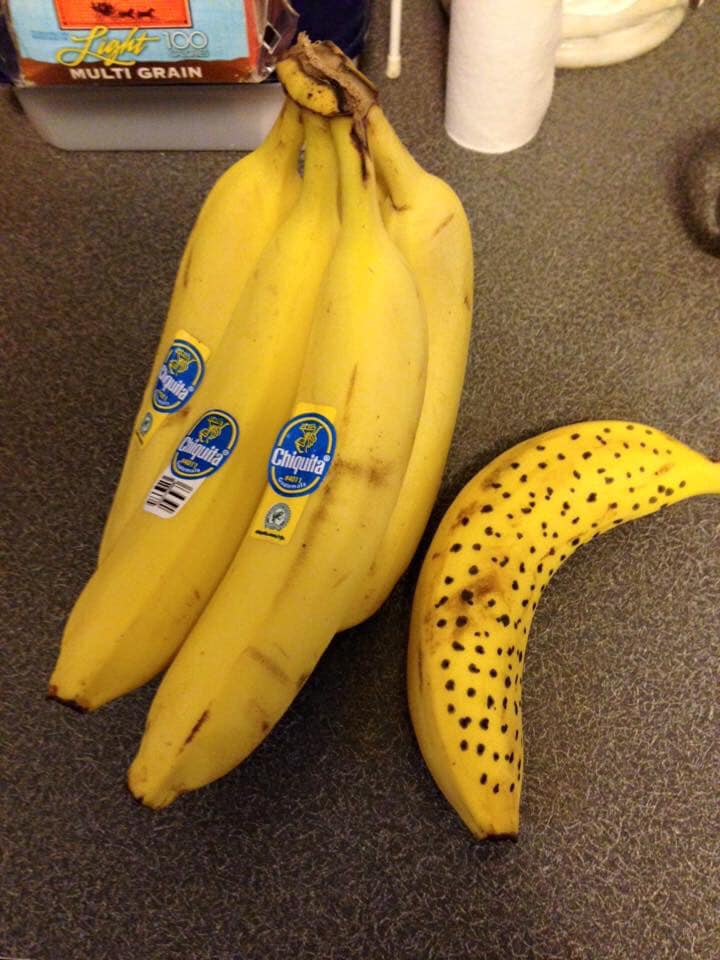
On the surface this seems like good news, but I rely on those black spots to inform me about how tasty a banana is. And when it comes to that, I’m a “13 kind of guy.” My husband is a “7 or 8 kind of guy.” What about you?

And I can’t think of that without remembering February 21, 2016, when I was still working and my husband made my lunch every day.

He knows how I like my bananas, but we didn’t have any ripe ones so he DIYed one up and put it in my lunch bag. Imagine my surprise when I opened it:

Yes he did make a banana ripe with a:

Sharpie

𝄞 See the tree, how big it’s grown… ♪

It’s September 23rd and 12 years ago today, in 2013, I started working at Red Hat.

One Arbor Day around that time, Red Hat had saplings in our building lobby to take for free in the spirit of “plant a tree,” and I took this River Birch, which we — meaning Bob — planted in our front yard.

Almost 10 years later, whenever we sit on the front porch in the morning, I marvel at the tree it has grown into.


Classic hagiography…

A hagiography is an idealized or idolized biography. This hardly manifests itself more often and dramatically than in obituaries. Seems like almost everyone who dies was virtually a saint. John Paulk calls out the hagiography in the death announcements about James Dobson.

As a gay man who spent the first 35 of my years on this planet in the closet — also known as not living my authentic life — and coming out only after considering driving my car into a ravine, this post speaks to me on all levels.


John Paulk was once the nation’s leading “ex-gay” spokesperson with Focus on the Family and Exodus International. In 2013, he renounced conversion therapy, apologized to the LGBTQ+ community, and now lives openly as a gay man.

James Dobson’s Legacy Isn’t Family Values: It’s Broken Lives Like Mine.
By John Paulk

James Dobson, founder of Focus on the Family, died today [Aug 21, 2025] at 89. Obituaries call him a giant of evangelical Christianity and a defender of families. That isn’t what I remember. I remember the damage.

Believing the Lie
For five years, I worked inside Focus on the Family. I was hired to direct the Homosexuality and Gender Division and created the Love Won Out Conference, which toured the country and sometimes drew more than a thousand people. From those stages, I introduced “ex-gays” who told audiences that homosexuality was a condition that could be changed if someone was motivated enough.

And I wasn’t just organizing the conferences — I was the poster boy. My story was held up as proof that “change” was real. I was placed on magazine covers, invited onto national television, and interviewed by countless major newspapers and radio programs. I wrote two books and spoke to audiences across the United States and Europe. My marriage, my children, and my faith were showcased as evidence that the movement worked.

But the truth was very different. I lied to the people I preached to, but I was lying to myself the most. I had become brainwashed by the false narrative that sexual orientation was changeable when it was not. Every headline that proclaimed me “cured” drove me deeper into despair, because I knew the truth hadn’t budged.

Behind the scenes, the torment was unbearable. I remember nights alone in hotel rooms before a conference, waiting to go onstage to tell my story of “freedom.” Instead of resting or preparing my notes, I would end up on the carpeted floor, curled in on myself, sobbing until my body heaved and I vomited. The weight of the lie crushed me: the truth I could not change, and the performance I was expected to deliver.

I remember one night in particular. The crowd was already gathering in the ballroom below, the sound of muffled voices rising through the vents like a distant hum. A knock at the door jolted me upright — an assistant checking to see if I was ready. I splashed water on my face, straightened my tie, and forced a smile into the mirror. But just minutes before, I had been begging God through tears: “Please lift this responsibility from me. I cannot do this to myself or others any longer.”

Then I walked out, took the stage, and told the crowd exactly what they came to hear.

That split — between the man on the stage and the man on the hotel room floor — nearly destroyed me.

Breaking Point
Faith had become a weapon aimed at people like me. We were told that “real Christians” must seek to be changed, that obedience meant erasing who we were. And when change never came, the conclusion was devastating: maybe we weren’t “real Christians” at all.

But the deepest harm wasn’t just mine. It was inflicted on young people who sat in those audiences and watched me on those stages and TV programs. Teenagers saw the posters, read the interviews, and thought: If he can do it, why can’t I? Parents brought their kids to us, hoping to “fix” them, only to leave with more shame and less love.

The science has confirmed what our lives were already shouting. The American Medical Association warns that conversion therapy doesn’t work and causes lasting harm. A 2022 meta-analysis in JAMA Pediatrics, covering nearly 200,000 LGBTQ people, found that 12 percent had been subjected to conversion efforts. Those young people reported double the rates of severe psychological distress and suicide attempts compared with their peers. The American Psychological Association likewise concluded in 2009: no evidence of change, overwhelming evidence of damage.

I didn’t need journals. My life was the proof. Conversion therapy didn’t make me straight. It made me ashamed, hollow, hopeless and suicidal.

Living Out Loud
I left the movement in 2003 and became a chef in Portland, Oregon. I never again spoke about my past or its aftermath. But in 2013–ten years later my struggle was to the point that if i didn’t do something to change all of this I was going to take my life. I couldn’t live with myself any longer. When I came out (again) it caused a national stir. After years of intense therapy and numerous national apologies to those for whom my message hurt, things began to mend.

Today, my life could not be more different. I live out loud. I walk in truth and authenticity. I no longer split myself between the man in public and the man in private — I am simply myself. I am a gay man–whole, safe, secure, and loved.

I spend my days being a voice for the disenfranchised and for those who feel lost without hope. I’ve dedicated myself to speaking truth, not lies, and to helping others untangle the shame I once carried.

And I am a joy-filled, loving father and grandfather. My children know me as I truly am — not a façade, not a “poster boy,” but a man who loves them without condition and who is loved in return.

I believe now what I wish I had known all along: that God loves us as we are and walks with us through the difficulties of life. Not as a punisher demanding change, but as a companion offering strength, grace, and love.

Reclaiming Life
When I read that James Dobson is being remembered as a man who cared about families, I think instead about the families torn apart by his message. Parents taught to fear their own children. Spouses trapped in marriages built on self-denial. Young people who looked at me — the smiling “success story” on the magazine cover — and walked away believing they were broken beyond repair because they couldn’t replicate my lie.

Dobson’s empire baptized cruelty and called it love. That is his true legacy.

But those of us who lived through it are writing a different ending. Our story is one of survival. It looks like telling the truth, even when it costs. It looks like acknowledging our complicity while naming the coercion. It looks like building lives where we no longer need to prove our worth.

For years, I parroted a message that broke me as much as anyone else. Today, I live in truth.

James Dobson has died. But we survived.

John Paulk can be reached at:
Johnpaulk9107@gmail.com
503-442-1111

Particularly puzzling prepositions

I thought of the “in” vs. “on” usage the other day for a term I, then, promptly forgot. But, it was similar to saying “in line” vs. “on line,” as in, “I’m standing in/on line for the next teller.”

AI reports:

When discussing waiting in a row or queue, “in line” is the grammatically correct and most common usage in most parts of the English-speaking world.

However, the phrase “on line” is a prominent regional variation, particularly prevalent in the New York City region. While it may sound less conventional to those outside this area, it is still used and understood in that specific region to mean waiting in a queue.

That’s specifically about “in line” vs. “on line.” The Britannica Dictionary talks about how to generally chose “in” vs. “on”:


More interesting than both of those, this entry — from Reddit, I believe — confirms that “the struggle is real”:

Why are “in” and “on” used seemingly randomly in English and how do you explain the difference? I have a friend from Mexico and he asked me to explain the difference between “in” and “on” in English and I didn’t know what to tell him because it really seems random which is correct to use.

  • You get in a car but get on a bus
  • Get in a helicopter but get on a plane
  • Sit in a seat but sit on a bench
  • Read something in a book but read it on a website
  • Lie on the couch but lie in bed
  • Do something on Tuesday but do it in May
  • See something on television but see it in a movie

Why is it like this?

Humans Are Sounding More Like ChatGPT, New Study Suggests (3-minute read)

Humans are increasingly subtly mirroring AI language patterns by using ‘GPT words’ (common words used by ChatGPT, like ‘delve’ and ‘underscore’) in conversation.

A new study suggests humans are starting to talk more like AI, a trend that started when ChatGPT came along a couple of years ago. The study tracked the frequency of GPT words in YouTube videos and podcast episodes from before and after ChatGPT’s launch.

Its results are a reminder that AI’s influence extends beyond just tools and into the very fabric of how we communicate.

Read the article on Android Headlines.

Sources:
•  TLDR. (2025, July 17). TLDR Newsletter. https://a.tldrnewsletter.com/web-version?ep=1&lc=f5cb7e17-003d-11ed-9258-0241b9615763&p=32e65c9e-62ec-11f0-841b-29051218926f&pt=campaign&t=1752749816&s=0ef92b1c6c2f50add1f27b3ba05fec59dd45f457d8678305e548adad32622387
•  Leon, J. (2025, July 16). Humans are sounding more like ChatGPT, new study suggests. Android Headlines. https://www.androidheadlines.com/2025/07/humans-talking-like-ai-chatgpt-study.html

Hollaback b-a-n-a-n-a-s!

My friend sent me this image saying, “7’s for me. Is it 12 or 13 for you?”

She’s not wrong:

  • She’s a lot like Bob (my husband); he picked #8.
  • To me, 12, 13 & 14 are great.
  • 13 looks perfect to slice and put atop some cereal that could use a little natural sweetener.
  • 14 would be good mixed in some vanilla ice cream.
  • And 15 is approaching one that we’d put in the freezer for when Bob makes my annual Best. Ever. Banana. Cake.

This reminds me, Bob knows me so well that one time when I was still working, I wanted a banana for lunch, but he knew the ones we had weren’t ripe enough for me, so he doctored one up with a Sharpie and packed it in my lunch.

Touching the sky

There are a number of songs whose lyrics include “I can touch the sky,” which makes me wonder, “Exactly how far up is it before the sky actually starts?”

Copilot AI to the rescue:

The “sky” doesn’t have a hard boundary. What we typically call the sky is Earth’s atmosphere, which extends about 62 miles (100 kilometers) above sea level to what’s known as the Kármán line — often considered the edge of space. That’s higher than any commercial plane can fly and where things start to get truly weightless

So, I says to Copilot, “But where does the sky start? Is it one-inch off the ground?”

In the most basic sense, yes—the sky starts right at your feet. The “sky” is really just Earth’s atmosphere, and we’re all living in the thickest part of it, called the troposphere, which begins at ground level and stretches up about 7 to 12 miles (12 to 20 km). So technically, every breath you take is part of the sky.

It’s just that when we look up, we perceive that vast expanse differently—like it’s separate from us, a thing up there rather than around us. But truly, you’re walking through the sky every time you stroll down the street. Kind of poetic, don’t you think?

With all that said, being able to touch the sky isn’t really a big enough deal to brag about.

Plume doom

A Hershey's Kisses bag and 3 kisses with their plumes highlighted.

In my recent reading of The Emperors of Chocolate: Inside the Secret World of Hershey and Mars, I learned that before there were machines to produce Hershey’s Kisses, the line-people (almost always women) in the factory had to lay that little strip of paper (the “plume”) down on the foil, put the chocolate on it, and then wrap it.

But sometimes the plume blew away before they could set the chocolate on it and wrap it. Because it happened enough, and because there was a lot of pressure to maximize their productivity, the women sometimes licked the chocolate and stuck the plume to it to keep it from blowing away before they could wrap it.

Reading that caused me to muse about, realistically, how important that plume is to the consumer. Please take this brief survey to let us know.

What effect would discontinuing the plume in a Hershey's Kiss have on your life? 1) It wouldn't affect met at all, because my helicopter parents unwrap my Hershey's Kisses for me. 2) I simply wouldn't be able to go on. 3) It would take me 1-2 years to adjust to it. 4) I could successfully transition to the new reality with a maximum of 2 sessions with my therapist. 5) My arthritic hands would welcome this improvement to the unwrapping experience. 6) It would be a mere spec in my circle of concern.

Father’s Day musing — hearing loss & back pain

My dad was “hard of hearing” for about as long as I can remember. Obviously, I could deduce that it was a result of being around loud noise, but I wasn’t ever exactly sure of the diagnosis.

In this medical record it says, “History of noise exposure includes heavy artillery beginning in 1948 and being a loader on 90 mm. guns up until 1953.” This is what one of those “guns” looks like:

And here’s the medical record:


Also for as long as I can remember, my dad had — sometimes debilitating — back pain. Not that there’s anything funny about back pain, but I had to laugh when I saw this note about prescribing PT for him, because 3 times a week I do 8 exercises to strengthen my core and my back, and those 2 exercises are part of my routine!

Father’s Day musing — a well-decorated Marine

My dad’s uniform hosted a lot of ribbons and some medals. This is a picture in the latter part of his career, when he was a Sergeant Major.

Looking through the many military records of his, before recycling them, here is a list of the “decorations, medals, badges, commendations, citation, and campaign ribbons” awarded to him:

Pistol Expert Marksmanship Badge Rifle Sharpshooters Badge
Korean Service Medal Korean Presidential Unit Citation
Vietnam Campaign Medal Vietnam Service Medal
Republic of Vietnam Armed Forces Honor Medal, 1st Class Republic of Vietnam Campaign Medal
Vietnam Cross of Gallantry w/Palm Combat Action Ribbon
Presidential Unit Citation Navy Unit Commendation
United Nations Service Medal National Defense Service Medal
Commendation Medal Armed Forces Expeditionary Medal
Good Conduct Service Medal (at least 10 of these) Purple Heart

The Purple Heart is the most distinguished award he earned, and I always thought it was a result of punji sticks, a type of booby-trapped stake, that went into his shin. However, this account that I came across in his medical records paints a different picture:

22 AUG 69. C Company, 1st Battalion, 4th Marine Division. While serving on active duty with C Co. of above named unit at approximately 19:15 hours on 10 AUG 69, 1st Sgt. Martin received fragment wounds to the right leg resulting from an enemy rocket, while in a defensive position. He was treated at 1/4 [illegible acronym] and returned to duty. Condition and prognosis are good. He will receive his first Purple Heart Award.

Receiving said Purple Heart:

Father’s Day musing — dad’s first job

Recently, I went through several file cabinet folders of paperwork related to my dad, who died 10 years ago this September 11th. The majority of the paperwork comprised health records and records of his military service in the U.S. Marine Corps, and I learned a few things about him in the process.

I knew he entered the military very young, as the family story goes that my grandmother had to sign for him to join because he wasn’t yet 18.

I also knew that he’d never graduated high school, because he earned his USAFI High School GED in 1959, and this document confirms that, where it shows his “non-service education” at the time as 8 years grammar school and 1 year of high school.

The thing I didn’t know about him was where he worked before enlisting in the Marines. This document lists Berkshire Fine Spinning Associates in Fall River, MA as his employer, and the “occupation” field says he was a “spare boy!”

I’d heard of neither that company nor that job position before. Thank the &deity for the internet.

According to Wikipedia: Berkshire Fine Spinning Associates (/ˈbɜːrkʃər/) was an American textile company. In 1955, the company merged with Hathaway Manufacturing Company to form Berkshire Hathaway. Wait! What??? My father worked for the precursor to Berkshire Hathaway, Warren Buffet‘s company??? 😂

The mill my dad worked in in Fall River was King Philip Mills, an historic cotton mill complex, which was acquired by Berkshire Fine Spinning Associates in 1930.

When I first saw “spare boy,” my thoughts immediately went to bowling, perhaps because as young girl my mother worked as a “pin boy” resetting pins at the bowling alley for, as the family lore goes, “a nickel an hour.”

But alas, in mill work, a “spare boy” was a young male worker who assisted with the operation of machinery in a textile mill, particularly during the early 20th century. They were responsible for ensuring the smooth functioning of the production process in the factory.

For instance, Andrew Stefanik worked as a spare boy in a textile mill in Chicopee, Massachusetts. His tasks likely involved supporting tasks like replacing bobbins and other general duties. This was a common role for young workers, especially “bobbin boys,” who often worked as spare boys.

The term “spare” suggests that they might not have had a specific machine assigned to them but were available to assist wherever needed, filling in for absent workers or helping with tasks that required additional hands. Historically, this could also be referred to as a “spare hand.”

Here’s a picture of a “bobbin boy” working in the mills, one of the jobs my dad presumably did as a spare boy.

Andrew Stefanik, a bobbin boy, works as spare boy, November 1911. Photographer: Hine, Lewis. Original public domain image from Flickr

Making up the bed

We have a picture, which we’ve learned is worth a thousand words, when trying to explain to cruise cabin stewards how we want the bed made up — especially if the steward’s English is a second language.

First of all, we need 3 pillows each.

Second of all, we want only the sheet on one-half (my half, the right side of the pic) of the bed, and the sheet plus the duvet on the other half (Bob’s half, the left side of the pic) of the bed.

This is really quite easily accomplished: put a queen-size sheet on the bed, and then put a twin-size duvet on top of the sheet on the left side — but it’s been our experience that, for some reason, this is very difficult to articulate with just words, so we keep this photo on our phone during cruises.

Picture of a cruise cabin bed made up with the duvet on only one half of the bed

Google query: Who is the patron saint of happy hours?

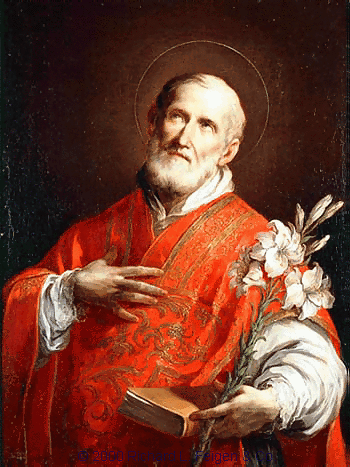
St. Philip Neri
While not formally recognized as the “patron saint of happy hours,” St. Philip Neri and St. Raphael the Archangel are often associated with joy and happy gatherings. St. Philip Neri is known as the patron saint of joy and laughter, while St. Raphael is associated with happy meetings and celebrations.
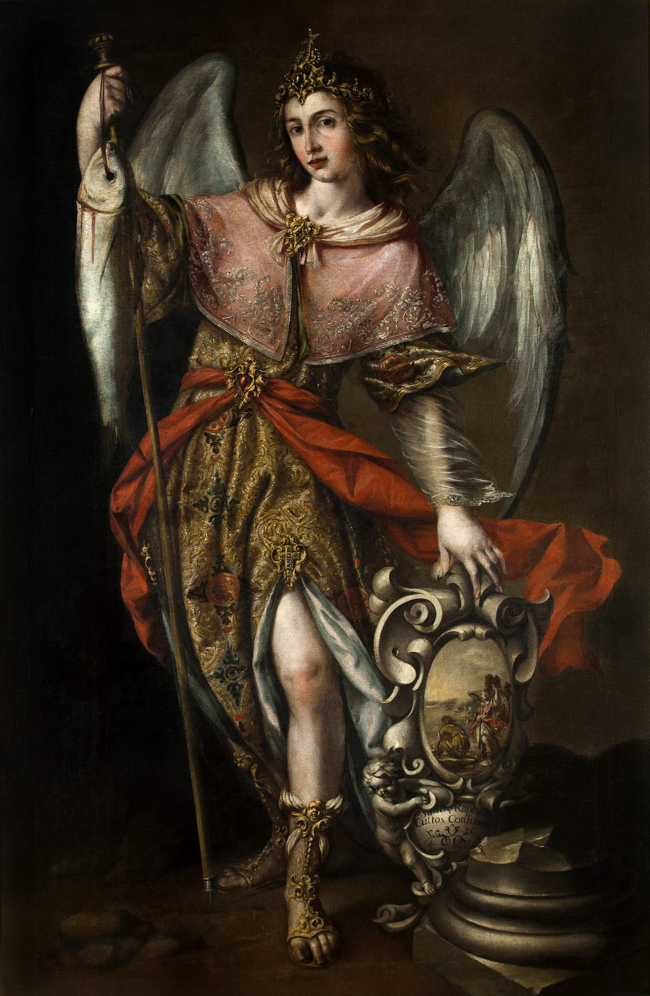
St. Raphael the Archangel

I’m not exactly sure what that thing is at the end of St. Raphael’s left hand, but I’m imagining it’s a formidable, furtive flask of bourbon.

There’s a kind of hush…

Have you heard that when talking in a group, and it gets quiet, it’s invariably at 20 minutes after the hour? I recently heard of this phenomenon from my brother-in-law, and apparently it’s a thing, since I just came across this passage in the book I’m reading:

They were there, okay, she lost in smoke, and everybody gathered around, seeming somewhat mopey, mooning, with no good talk going on… But maybe I just arrived at twenty after or twenty till when the silence-spreading angel passes overhead.

Curious about it, I googled the phenomenon to see if any research has actually been done on it. Spoiler alert: According to this article on the HowStuffWorks website, Does a hush really pass over a crowded room 20 minutes after the hour?: “it might be more of a myth or superstition rather than observable group behavior patterns.”

With that said, there’s a lot of hedging language in that conclusion: “it might be” and “more of a” and “myth or superstition.” And with that said, I don’t see any cited research on it on scholar.google.com.

Location, location, location…

My sister texted me: “Are you familiar with INRI above the cross/crucifix in most Catholic churches?”

Image of Jesus on the cross with the INRI inscription on it
Image from the New World Encyclopedia

I said I was, but that I didn’t know, or can’t remember as I’ve probably looked it up before, what it means.

Then I shared what I’d found as to its meaning, to which she replied:

Yes, but what makes me laugh is Pépère [our maternal grandfather, who lived in Pawtucket, RI] used to say it stood for “In RI” [“in Rhode Island”].

This is not only hilarious to me, it’s a family story I’d never heard.

“Chocolate ‘in a Petri dish’ could save crisis-hit industry”

“Lab-grown chocolate could rival traditional chocolate in several ways. The process can grow cells that multiply swiftly and mature within a week, as opposed to the six to eight months usually required for a conventional cocoa crop. The resulting product can also contain higher levels of health-promoting chemicals and fewer contaminants such as heavy metals or pesticides. The price of cocoa is skyrocketing as the industry deals with drought and other problems.” Source: TLDR. (2025, April 23). TLDR Newsletter.

Read the full article (a 3-minute read): The secrets of lab-grown chocolate.

Why I don’t get “bored in retirement”

People ask me how I don’t get bored during retirement, and when I say I’m on my computer at least 8 hours a day, it seems hard to believe. Well, this is a typical morning, which can take up at least 2-3 hours:

Doing morning brain teasers:

AARP crossword puzzle
L.A.Times crossword puzzle
NYT Strands game
NYT Connections game
NYT Wordle game

Next in my routine are visiting these websites:

Check our Google calendar for the day’s commitments
Check today’s to-do list in my iPhone Reminders app
Review our checking account activity
Update my sentence-a-day diary
Check my wait-listed library books for movement
Check the morning’s stock market activity
See what my exercise check-in is for today
Read the day’s TLDR newsletter
Check the daily BookCrossing releases
Check my daily BookBub email for free e-books

I do things like this on the computer throughout the rest of the day:

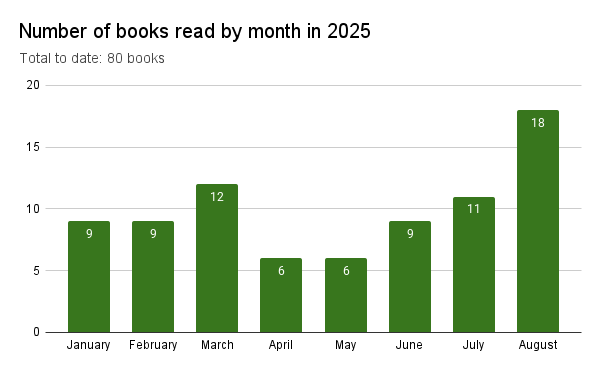
And usually, I spend my evenings reading. As of today, I’ve read 30 books so far this year.

Bar convo snippet

We’re in a gay bar and looking at a girl wearing some very short white shorts and some above-the-ankle white boots, which give her a look that reminds me of a high school baton twirler, like the one who threw her baton high into the air — sometimes too close to me — while I was performing my drum major duties.

Senior-year drum major, 1974 high school football season

Me to my gay friend standing nearby looking at her, too: Do you ever look at a woman and wonder, “If I were straight, would I ‘go for summa dat?'”

Friend, thinking for a moment: No, I can’t say that I have. But, I have wondered if I were born a girl, what kind of girl I’d be. A whore? A”good” girl?

Judgy-Judgerson to a whole new level

Spent some time today during my upper-body workout at Planet Fitness reflecting on how I became such a rule-follower and resisting the very strong urge I have to police the rule-breakers, telling myself, “You don’t work here,” “This has nothing to do with you,” and “Finish your own workout and get out of here.”

Background

Planet Fitness has a rule stating:

There was a guy there tonight in flip flops — who happened to be hot, which made it extra challenging for me not to keep looking at him — doing free weights and the multi-station workout machines.

Here are all the thoughts I had over the course of the 45 minutes I was there:

“I wonder why no front-desk workers have told him that he can’t be working out in those because it’s a safety hazard.”

“Why hasn’t that digital sign on the monitors throughout the gym come up to that slide that says, “Flip flops are great at the beach. But they are a hazard at the gym. And not allowed.”

“That guy would never just happen to walk by the monitors at a time when that one slide was showing anyway, much less be looking at it — or care.”

Once when he walked right by me, I thought hard: “Don’t do it. Don’t say anything. Man, he’s hot.”

“I wonder if I alerted the front desk people to him, if they would actually approach him.”

“I wonder if I did alert the front desk to the situation, and they didn’t approach the guy, and then the guy dropped a weight on his foot and sued Planet Fitness…”


Bless my absolute mess.

My anti-bucket list

The top-3 items in my anti-bucket list are:

  • Drink cognac or tequila

    I first had cognac in the south of France during a 6-week business trip I was on, and even though I desperately wanted to like it because it sounds so sophisticated to say you drink it, I found it deplorable. And tequila is that drink for me—the one of which I drank too much in college one day and barfed my brains out afterward.
     

  • Drive from Miami to Key West

    I’ve done this once—rented the convertible and all. Two things: 1) To me, convertibles and fireplaces are two things that sound good “on paper,” but the reality is your hair gets messed up in the former and somebody has to get up every 10 minutes and tend to the fire for the latter. 2) With regards to this trip specifically, most of the route is 2-lane roads, which when you get behind—let’s just call them life-experienced—Florida drivers there’s little opportunity to pass, and I’m an impatient-AF driver.
     

  • Visit the Grand Canyon

    Here’s the backstory and the little inside joke Bob and I have whenever looking at something a lot of people go on and on about:

What’s something on your “anti-bucket list?”


Prompt: Perfectly clear

Writing prompt: Start with “It’s all perfectly clear now.”


It’s all perfectly clear now that I will have a successful career. With a 41-year career behind me, even if things go south in my remaining 8 months of working, that won’t change.

It’s all perfectly clear now that I will be “lucky in love.” I’ve been married to two smart, ambitious, self-sufficient, loving, companionable, honorable, and easy-to-love people. In each case, we’ve had shared values around work, religion, and finances. During my time here, I’ve been lucky to find not one, but two, people who were emotionally, physically, and financially healthy. And I’m grateful.

It’s all perfectly clear now how I’ll handle the deaths of my parents. It’s a great source of comfort to know that they had a good life, that the end was quick and peaceful for both of them, that I stepped up to the plate when I was needed, and that I won’t spend my entire old age tending to theirs.

What’s perfectly clear to you now?


Why I think Wordle is more luck than skill

Here are 3 reasons why I think the recently-gone viral game is so popular:

  • It has a broad audience, appealing to both logophiles and logicians alike.
  • It has a super high degree of luck involved.
  • It was designed so that most people get most answers in 6 tries.1

I posit that luck is the biggest factor in solving the puzzle in 3 or fewer attempts. My reasoning:

The more letters you get in the first guess, and the more of those letters that are in the right place, gets you exponentially closer, statistically, to the answer.

Granted, logic can be used in deciding which letters you use in that first word, such as choosing letters that appear, statistically, in more words, letters such as R, S, T, N, L, and E. But, there are so many of those words that’s it’s just going to be luck that the word you settle on has letters that are actually in today’s answer and even luckier if any are going to be in the correct position in today’s answer.

Another huge aspect of luck is when you place a letter that you already know is in the answer, but not in the correct position, in a different position to find its correct position or eliminate another wrong position for it, and you try to choose “the most likely” place it would be, often it’s as likely to be in one place as another, so you have to just chose a place. Luck!

And then even when you’ve narrowed it down to 2 or 3 words it could be, you’re just lucky if you choose the right one. For example, here’s where I was today going into my 3rd guess (on which I actually got the correct answer):

At this point, I knew I wanted to try a word with “i” since I knew a, e, and o weren’t in it, and “i” is more likely than “u,” so I chose it.

Also, I wanted to try the “m” in a different spot to narrow down where it actually falls in the word. And then I thought, I think “i” appears before “m” more often than it falls after “m” so I went with “im” instead of “mi.” But the fact that I chose to put the “i” in the middle of the word was arbitrary, and as luck would have it, it was correct.

When deciding to put “im” where I did, I then asked what words fit the pattern “- – i m -“? And looking at the letters left on the keyboard that hadn’t been eliminated, I first saw “chimp” as a possibility, and then crimp, blimp, and primp (that ugly chance that “p” was used twice).

The only logic I used in finalizing this decision was that I think “r” is more frequent that “l”, and “p” is in several of the words I’m considering, so I’m going to go with one of the “-rimp” words. Pure luck! It was just as likely to have been chimp, blimp, or primp.

Or, with the letters available going into that third guess, the answer could just as easily have been milky! But, I just happen to see “chimp” first in those available letters, so I worked with those. Luck, I tell you! So much luck!

1According to Josh Wardle who invented the game: ‘Wordle’ Creator Shares Ingenious Tip For Players—Even If He’s Not Very Good At The Game

New dictionary words, because language

I absolutely love Merriam-Webster’s Word Matters podcast. Its most recent episode is about their addition of 455 new words into the dictionary. Notes about a few of them:

fluffernutter
Peter Sokolowski: “Well, there’s no question that the favorite, the darling of this batch is the word ‘fluffernutter,’ and everybody loves that word, and I do too. It’s a fun word to say.”
Emily Brewster: “I did not write this definition and I really love that it specifies the white sandwich bread. If somebody is making you your fluffernutter on whole grain bread, they are doing it wrong.”

whataboutism
Peter Sokolowski: [I] like the term whataboutism that we added to this batch as well because the definition is the act or practice of responding to an accusation of wrongdoing by claiming that an offense committed by another is similar or worse.
Emily Brewster: Yes, and we also entered in British English, they don’t say whataboutism, they say whataboutery.

amirite
Emily Brewster: “Sounds like a phrase; it’s a single word. It’s slang. It’s used in writing for the phrase ‘Am I right?’ to represent or imitate the use of this phrase as a tag question in informal speech. It’s the second time in recent history that we have entered a word that is primarily a written form. I think it was just a few months ago that we entered the spelling of folx, F-O-L-X.”
Peter Sokolowski: “But you can’t tell by just hearing it.”
Emily Brewster: “Nope. Doesn’t work in speech, right? You have to see it for it to really do its job. The word F-O-L-X and F-O-L-K-S sound exactly the same, just as ‘amirite’ and “am I right.” You can say it with a nod that kind of implies that you’re using this single word spelling, but it’s a written form.”

the prepositional use of because
Emily Brewster: “It’s the use of because that you see when someone says, ‘This very technical process works, because technology.’ So traditionally, ‘because’ functions as a conjunction, it joins together phrases or clauses, but this is a new use of because. It’s very informal. It’s very useful. We say in our definition that it is often used in a humorous way to convey vagueness about the exact reasons for something. I like it. Don’t go using it in your term papers.”


This one made me LOL, because I have employed this usage of “because” in one of my exercise check-ins: “I always carry a knife in my pocket; you know, because cheesecake.”

If you love words or if you have an “attitude” about what words should or should not be in the dictionary (e.g., irregardless), you’ll enjoy this 28.5-minute episode—and you’ll learn a few things about how words “make it” into the dictionary. Spoiler alert: It has nothing to do with whether you like them or not. 😂

Hopes & dreams

A colleague asked in a work chat room: “Since I hate setting resolutions, what are everyone’s personal goals or dreams for this year?”

My response:

  1. Finally take our cruise, which was originally scheduled for April of 2020, then postponed to September of 2021, and is currently still scheduled for April of 2022.

  2. Start blogging regularly again now that I’m not having to come up with a theme for, and write, three 50-word stories a day.

  3. Retire on my birthday in October.

  4. Schedule post-retirement travel using up $3000 worth of airline vouchers we have from canceling and postponing trips over the past 2 years.

Our April cruise on the Seven Seas Splendor

Stock watching

COVID SALE

Toward the beginning of COVID, on March 16, 2020, the stock market plummeted nearly 3,000 points, and I went shopping for some depressed stock.

A month earlier, IBM stock was trading at $149.92 per share, so on the day of that crash, I snagged 250 shares at $94.51 per share. How can you resist a stock that’s essentially on sale for 37% off?
Purchased for $23,630. Currently worth: $34,887. Up $11,257.

STOCK SPLIT “SALE”

I’d wanted Apple stock for a long time, but I’d always considered it too expensive. So, when its $500-per-share price was set for a 4-for-1 split on August 28, 2020, I bought 25 shares on August 27, 2020, waking up the next day with 100 shares at $125 per share.
Purchased for $12,500. Currently worth: $18,214. Up $5,714.

ROI TO DATE

Even though I am fully aware that it’s nothing but a “paper gain” at this point, it still tickles me to no end to have a 47% gain on the IBM purchase and 45% gain on the AAPL stock.
Total spent: $36,130. Currently worth: $53,101. Up $16,971.

Sure beats the credit union’s tenth-of-a-percent return on savings and 1.25% return on a 5-year CD—and my money’s only been tied up for less than a couple of years.

I’ll enjoy this ride until the next big crash, unless I sell before then. The good news is that the time has passed to make these both long-term gains now, so I can “pull the sales trigger” at any time tax-wise, at least.

Contemplating the new year

It’s the first day of the year in which I’m going to retire.

I’m not retiring in the traditional sense of the word; that is, there won’t be a gold watch or a pension involved. Furthermore, it’s not my first time at the retirement rodeo.

I like to do big things on my birthdays:

  • On my 57th birthday, October 13, 2014, I retired for the first time.
  • On my most recent birthday, October 13, 2021, I bought myself a brand new, $50,000, left knee.
  • And on my 65th birthday, October 13, 2022, I’m going to retire again.

I’m hopeful that retirement will “stick” this time for 3 reasons:

  1. Healthcare. I’m (or will be) 8 years older than the first time I retired, and I’m eligible for Medicare to aid in medical coverage, which was a concern the first time I retired.
  2. Expectations. I have more realistic expectations about being retired since I’m somewhat “experienced” in it. The first time, I made a retirement to-do list a mile long, and the best lesson I learned during the 1 year and 4 months that I was retired was that because you have time to do something doesn’t mean you’re going to want to do it. I think a lot of us convince ourselves we don’t do certain things (like organizing all of those—printed or digital—photos) because we don’t have time to do it, when the reality of it is that even when you do have time, it’s mind-numbingly tedious and probably not something you’re going to want to spend time doing.
  3. Life events. This time, I won’t have a father die a year after I retire and a mother to worry about eventually running out of money, which was one of the reasons I went back to work that first time.

Retirement countdown as of this posting

My 60th birthday

~Friday, 10/13/17~

Here are 4 highlights of my life that stand out over these last 10 years. I just couldn’t narrow it down to 3—too much has happened this decade.

50 – 59 years old (2007 – 2016)

CELEBRATING TWO MILESTONE BIRTHDAYS. For my 50th birthday, I went to 3 places in Australia that were listed in the book, “1000 Places to See Before You Die.” One was in the Blue Mountains just outside of Sydney, one was Seven Spirit Bay on a private island in the outback that you had to be taken to by private plane, and the third was Heron Island on the Great Barrier Reef. For my 55th birthday, I saw Barbra Streisand in concert in Brooklyn. It’s something I’d wanted to do all my life and had been willing to spend up to $1000 for a ticket. You can just imagine my delight when I scored a seat for $399.

RETIRING (THE FIRST TIME). On my October 13, 2014, I gave myself the birthday gift of a lifetime—I retired. My boss and my team were so gracious and supportive of my decision and they gave me a wonderful send-off, complete with limericks, haiku, and love. I enjoyed being retired for one year and three months, and then as it so often will, life happened. Eventually, I’d have the second biggest coming out in my life, coming out of retirement in February of 2016. You can read why if you’re interested.

LOSING A PARENT. On Tuesday, September 8, 2015, I had the hardest conversation in my life with my dad about entering him into hospice. He died three days later.

LEGALLY MARRYING A PHENOMENAL HUMAN BEING WHO JUST HAPPENS TO BE A MAN. On June 26, 2015 the Supreme Court of the United States ruled in favor of same-sex marriage and that night, I asked Robert Anthony McVeigh to marry me, which he did on November 28th. With Bob’s family of 14 siblings, I picked up a cool 108 in-laws in one day, while he inherited a grand total of 8. We had an unbelievable November weather day and married in our backyard with heartwarming support from friends and family who traveled near and far to be there, including my ex-wife.

Other reflections: Birth – 9 years old | 10 – 19 years old | 20 – 29 years old | 30 – 39 years old | 40 – 49 years old

The penultimate day leading up to my birthday

~Thursday, 10/12/17~

As I countdown to my 60th birthday tomorrow, here are 3 highlights of my life that stand out for these years.

40 – 49 years old (1997 – 2006)

CRUISING THE GREEK ISLES. In 1999, I toured the Greek Isles on the now-defunct Renaissance Cruise Lines. Our itinerary consisted of two days in Athens, port calls in Santorini, Rhodes, Kusadasi, and one day at sea cruising The Dardenelles. It ended with two days in Istanbul.

A SURPRISE PARTY FOR MOM AND DAD’S 50TH ANNIVERSARY. In September of 2003, my sister and I organized a surprise party in Orlando for my parents’ 50th wedding anniversary. We had invited several of their brothers and sisters to join us there, offering to pick up their 3-day, 2-night hotel tabs and dinner the actual anniversary night. We hadn’t told anyone that we were eating at Emeril’s Orlando (location now closed, but he still has ones in New Orleans; Miramar Beach, Fla; and Las Vegas), and since some of them came to the event from Fall River, MA, and my parents were born and grew up in that city, and that’s where Emeril is from, and we’re all Portuguese… well you can imagine how excited everyone was when we arrived there. I picked up the tab, which to this day remains the most I’ve ever paid for a dinner at $1503.00, which included the $364 tip. Worth every penny. Read about the details, including the exquisite customer service.

CRUISING ALASKA WITH FAMILY. In 2005, I went on an Alaskan cruise with my sister, my parents, my aunt and uncle and their daughter, and my aunt’s sister and her husband. The itinerary included: one day cruising the Inside Passage, a Ketchikan port call, a Juneau port call, a Skagway port call, a Wrangell port call, and a final day at sea.

Other reflections: Birth – 9 years old | 10 – 19 years old | 20 – 29 years old | 30 – 39 years old | 50 – 59 years old

The antepenultimate day leading up to my birthday

~Wednesday, 10/11/17~

As I countdown to my 60th birthday on Friday, here are 3 highlights of my life that stand out for these years.

Note: The coincidence is not lost on me of this post falling on National Coming Out Day.

30 – 39 years old (1987 – 1996)

TOUR OF EUROPE WITH OUR PARENTS. In 1987, my wife and I treated both sets of our parents to a 13-city bus tour of Europe with stops in London, England; Paris, France; Italy (The Italian Lakes, Rome, Ostia, Florence, Venice, and Verona); Innsbruck, Austria; Germany (Munich, Heidelberg, and a Rhine River Cruise); and Amsterdam, Holland. It was challenging at times, but so worth it as my mother still gets a charge out of saying, when someone mentions one of those European cities, “Oh, I’ve been there.” As I write this, it occurs to me that that was 30 years ago this year, and my parents were 5 years younger than I’ll be on Friday.

QUITTING IBM AND WORKING ON MY NOVEL. In 1993, IBM offered the first “package,” in which they paid employees to leave the company. Since my wife worked there, too, and we were DINKs (double income, no kids) making a ton of money, I applied for it and was accepted, taking a $30,000 payout to do what I wanted to do anyway—leave. For the next year, I worked on a novel, got as far as chapter 9, and then couldn’t figure out a believable way to get my protagonist pregnant. Shortly after that I came out.

COMING OUT. One day in 1994, on my way home from IBM to our quarter-of-a-million house, in our BMW, I wondered, “Is there any way I could drive this ‘ultimate performance machine’ into that roadside ravine in such a way that I could be sure I wouldn’t have to live with an ‘intending to die’ for the rest of my life?” That’s when I knew it was time to start living my authentic life here. My beautiful, loving, and incredibly generous wife’s response to my coming out? “I’m so sorry that we live in a society where you’ve felt like you couldn’t be who you really are your entire life.” As we were packing to sell the house we’d custom built, we glanced at each other from the rooms on opposite sides of the upstairs shared bathroom while Whitney sang, “I Will Always Love You.” I can still tear up when I hear that song today, especially the lines, “Bittersweet memories – That is all I’m taking with me. So good-bye. Please don’t cry: We both know I’m not what you, you need…”

Other reflections: Birth – 9 years old | 10 – 19 years old | 20 – 29 years old | 40 – 49 years old | 50 – 59 years old

The preantepenultimate day leading up to my birthday

~Tuesday, 10/10/17~

As I countdown to my 60th birthday on Friday, here are 3 highlights of my life that stand out for these years.

20 – 29 years old (1977 – 1986)

GETTING MARRIED. I got married at 20 to a 21-year-old woman, whom I truly did love, even though I knew I was gay at the time. It seems hard to believe nowadays, but I truly didn’t think coming out was an option, and I truly believed I could “make it work.” We had a lot in common—both military brats, both Catholic, both with the same financial aspirations and willingness to work and save to achieve them. We really were a good team—right up until we weren’t. I’m grateful for many invaluable lessons I learned about being in a relationship, most of which transcend gender and time. See wedding pictures from another time and place.

STARTING A CAREER. I got hired by IBM right out of college, and I remember that first day, Monday, May 19, 1980, taking the Alexander Drive exit off NC-147 in the Research Triangle Park, turning into IBM, and thinking, “I have arrived.” Over the course of 21 years there, I would do programming, test software, manage 9 software testers, work on quality (Six Sigma, The Defect Prevention Process), track service tickets and test fixes, become a member of the network performance team in IT, and then work on the IT communications team. In the later years, I would become an information developer writing software documentation and eventually become an editor.

GETTING A VASECTOMY. At age 29 and 9 years into our marriage, we’d known all along we didn’t want kids, so I got a vasectomy. The Duke surgeon wanted me to get permission from my parents, which of course, I refused to do. I said, “I no longer get permission from my parents to do anything.” On the day of the procedure, with my legs up in stirrups and my junk pulled through a hole in a sheet, the surgeon said, “We have a group of interns that we’d like to watch the procedure, if that’s okay. Having already attained “maximum shrivel factor,” and with the valium beginning to kick in, I said, “Why not? Pop some popcorn and give them all front row seats.”

Other reflections: Birth – 9 years old | 10 – 19 years old | 30 – 39 years old | 40 – 49 years old | 50 – 59 years old

The propreantepenultimate day leading up to my birthday

~Monday, 10/09/17~

As I countdown to my 60th birthday on Friday, here are 3 highlights of my life that stand out for these years.

10 – 19 years old (1967 – 1976)

GETTING MY LICENSE AND GRADUATING FROM HIGH SCHOOL. I learned to drive on a car with a stick shift, and I got my license as soon as I could at 16. One time, as a newly-licensed driver, I parked in the inclined driveway of a girl’s house, and after we’d kissed for about 30 seconds, I opened my eyes to see that we’d rolled down the driveway and into the street because I’d had my foot on the clutch instead of the brake. I graduated 4th in my high school class in 1975 to Pomp & Circumstance and our senior class song, which was Stairway to Heaven.

GOING TO COLLEGE AND THE FIRST TIME FEELING LIKE AN ADULT. I didn’t do very well on my SATs (verbal higher than math—no surprise there), but I did get accepted into East Carolina University. I initially planned to major in Music before switching to their Math with a Computer Science Option degree. This was before there was a separate, accredited Computer Science degree, and I “wrote” Assembly and Cobol programs on an IBM punched card machine and later learned to program a PDP-11 computer. The first time I felt like a bonafide adult was shortly after moving into a dorm, when someone asked me to play tennis at 10 o’clock on a “school night,” and I realized it wasn’t “too late to do that” if I wanted to, and I didn’t have to ask anyone permission anyway.

WORKING MY WAY THROUGH COLLEGE AND BUYING MY FIRST CAR. For the first two years of college, I rode a bicycle from my dorm to Burger King, where I worked 40 hours a week at $2.37/hour while carrying a full class schedule. I once got a ticket for riding my bike home from work with no light on it after dark, and I remembered being outraged that someone working as hard as I was “just to make it,” would be “penalized” in that way. Then, I bought a brand new 1977 Toyota Corolla, and my car payments were $79 a month.

Other reflections: Birth – 9 years old | 20 – 29 years old | 30 – 39 years old | 40 – 49 years old | 50 – 59 years old

The eve of the propreantepenultimate day leading up to my birthday

~Sunday, 10/08/17~ And so begins the countdown to my 60th birthday on Friday. I’ve been thinking about this for the past couple of months, and it’s been an interesting exercise trying to narrow down 3 things to highlight about a whole decade of your life. It’s made me think of Jonathan Larson’s Seasons of Love from Rent, the musical, a few times, too.

So, without further ado, here’s today’s reflection.

Birth – 9 years old (1957 – 1966)

BEING A MILITARY BRAT. My dad was a 30-year career marine, and we moved around a lot in my formative years. Most of it was between the ages of 4 and 13, and I attended 9 different schools between kindergarten and 7th grade. Most of the places were in Massachusetts, where all of both my mom’s and dad’s families lived. See a list of all the schools I went to and where.

LEARNING ABOUT AMBITION AND DETERMINATION. When my dad went to Vietnam for a year—his second tour there—we lived upstairs from my aunt and uncle. My uncle was building his own home, and I watched him cut stone that he had previously measured to fit its neighboring pieces already up. He cut the stone by hand, with a chisel. If I remember correctly, it took him over 10 years to finish that house. See a picture of the house.

REALIZING I WAS GAY. At age 7, I began to realize that I was gay, although I didn’t know that word then. It was more like coming to the frightening realization that I was a freak—one of those kind of people—and although I didn’t know it then, it was the beginning 28 long, and at times exhausting, years trying to hide it.

Other reflections: 10 – 19 years old | 20 – 29 years old | 30 – 39 years old | 40 – 49 years old | 50 – 59 years old