Book #20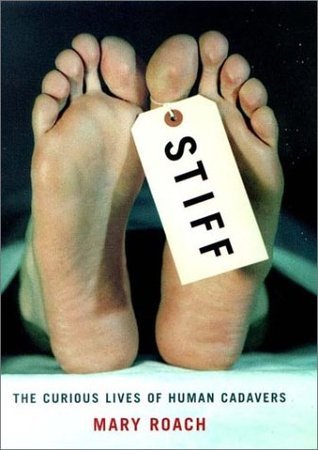 |
Book: Stiff: The Curious Lives of Human Cadavers | Author: Mary Roach | |
| Source: Library loan Format: Audiobook |
Pages: 292 | Duration: 03/19/26 – 03/20/26 (2 days) | |
| Rating: ★★★★☆ | Genres: nonfiction, science, medical, humor, death, history, biology | ||
| 📕10-word summary: A scientific, intellectual, and emotional look at our bodies’ destinies. 🖌6-word review: Informative, at times humorous, and detailed. |
|||
| 💭A favorite quote: “The way I see it, being dead is not terribly far off from being on a cruise ship. Most of your time is spent lying on your back. The brain has shut down. The flesh begins to soften. Nothing much new happens, and nothing is expected of you.” | |||
| 🎓New-to-me words: venerated, divarication, many other biology, chemistry & medical terms | |||
| Description:* Mary Roach takes the age-old question, “What happens to us after we die?” quite literally. And in Stiff, she explores the “lives” of human cadavers from the time of the ancient Egyptians all the way up to current campaigns for human composting. Along the way, she recounts with morbidly infectious glee how dead bodies are used for research ranging from car safety and plastic surgery (you’ll cancel your next collagen injection after reading this!), to the authenticity of the Shroud of Turin. While the myriad uses for cadavers recounted are often graphic, Roach imbues her subject with a sense of dignity, choosing to emphasize the oddly noble purposes corpses serve, from organ donation to lifesaving medical research.*From goodreads.com’s synopsis. | |||
| Thoughts: This was a interesting, informative, and at time, light look at a subject that a lot of people find heavy and shy away from, but that I find interesting. I only took off a star (4, instead of 5), because I’m not really into medicine, biology, and chemistry to the depth explained in this book. So, YMMV depending on that. One frustration I had reading this now-23-year-old book was that I wondered how some of the ways to “process” dead bodies just beginning to be explored in 2003 (e.g., water cremation) have progressed. Well ChatGPT & AI to the rescue! Q: What are the eco-friendly ways to avoid burial and cremation? A: natural (green) burial | conservation burial | human composting (natural organic reduction) | water cremation (alkaline hydrolysis) | tree pod burial | mushroom burial suit | reef burial | biodegradable caskets & shrouds | and home funeral + natural burial. | |||
See the rest of the books I’ve read in 2026 and previous years: 2025 | 2024 | 2023 | 2022 | 2021 | 2020 | 2019.